Posts

Short Story : Rite of passage - 16 years old kids in London from different cultures

Image
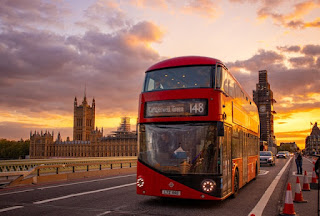
September, 1988. Mornings in London were beginning to darken, and the air carried that crispness hinting at the onset of autumn. I walked into the kitchen for breakfast, the faint aroma of toast and tea in the air. My father looked up from the table, his face a curious blend of seriousness and routine. “You’ve got to register at the police station within a week of your 16th birthday,” he said, setting his mug down. “It’s for the Alien Registration. Best to tell your teacher—you’ll have to miss a class since they only process applications during the day.” Alien Registration. The word lingered in the air. Alien. It wasn’t a word I was entirely unfamiliar with. It carried two meanings, after all. One, a visitor from another planet; the other, a foreigner. The latter always seemed to sting a little, as though the law had to remind you that you didn’t quite belong. Among the older students at school, the term sparked no end of irritation. “Alien—honestly, what kind of language is that?” I’d...

Cultural Gastronomy: What Sashimi and Cheese Fondue Taught Me

Image
    Nothing reveals cultural differences quite as clearly as food. Something considered a delicacy in one country can be described as “disgusting” in another. Forty years ago in London, I experienced both sides of this cultural divide. One day at school, a Swiss friend asked me, “Japanese eat raw fish, don’t they?” I said yes, and he replied, “Ugh.” How awful. How could anyone call something as delicious as sashimi “disgusting”? “Raw fish” does mean fish that has not been cooked. But the expression can also conjure up an image of someone taking a fish straight from a tank, a river or the sea and biting into it whole, head and all. I tried to explain by using Italian carpaccio as an example. I told him that Japanese people ate fresh fish cut into thin slices — sliced fresh fish — rather than simply eating a whole fish raw. I explained that fish carpaccio might be served with olive oil and balsamic vinegar, whereas Japanese people dipped theirs in soy sauce. He seemed to get...

Slanted Eyed Japanese Gained a Wisdom on a Street of London

Image
  One day, about 40 years ago, I was on the way from school to the underground station .   At that time, few people started call Japanese “Slanted eyes” at the school.  The person making racial remark was using typical London way - to wisper into your ear a racist remark, to make sure you hear it but no one else.  It was almost everyday thing that adults in suites wisper into my ear with horrible racist remarks. Beware, it was almost 40 years ago and things might be different now. Few girls, who have faced racial abuse for the first time, were either in deep shock or panic.  As I consoled them and give them emotional support, I was beginning to think I can not take this burden any more. Everyday, someone was crying, and they somehow call me and asked me to listen to  what they have to say.   One of the girls reported the racial remarks to a teacher who was responsible for the school affairs.   The process was slow, and I was almost t...

Racism in a school and the friend's help

Image
  About 40 years ago in Japan, School teachers were considered as highly respectable people, with high moral, someone to be admired. Children were expected to comply to teacher’s instruction, and had almost no doubt that they will not be misled by teachers.   Probably clever children might have come up with a different opinion, that teachers are human being after all, and they do make mistake and they do have moral problem.   As an average Japanese child grew up in 70’s and 80’s, I vaguely thought that school teachers are trustworthy.   Then came an encounter with an American teacher, who has changed my point of view.   I was at an international school in London, and on a first day of English literature class for EFL students, I was harassed by the American teacher and thrown out of the class room because my handwriting in English was not satisfactory.   The teacher also threw out another Japanese student, who previously attended the EFL...

The Canary Islands: Wine and the End of Year Party

Image
 One winter, my family and I embarked on a journey to the Canary Islands, situated off the coast of North Africa, to celebrate the year-end holidays. These islands, a bit farther south than the Mediterranean, are renowned for their numerous volcanoes. My destination was one of the islands in the archipelago, Lanzarote. It's a Spanish territory where the predominant language is, unsurprisingly, Spanish. Upon landing at the airport and traversing the island by bus, I beheld many curious sights. I noticed peculiar circular enclosures made of stone, with greenery growing in sunken centers. Our guide explained that these were vineyards. The island, formed from volcanic ash, experiences strong winds, making it challenging to cultivate taller crops. Thus, they construct enclosures with rocks to shield against the wind, creating depressions in the center where grapevines thrive. That day, our group of nearly thirty individuals was meticulously led around by our guide, showcasing variou...

Japan : Very Old History of Japanese Wine - The Culture and History of Drinks Around the World

Image
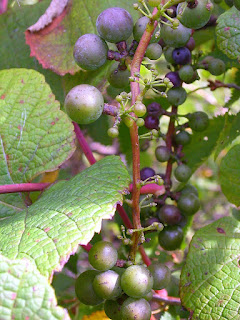
 In my early years, I resided in the Tohoku region of Japan. Near the housing complex nestled in the mountains, there was a forest where various fruits grew.   Among them, the mountain grapes held a special fascination for my young heart. Simply put, they looked delicious. Despite being warned by adults never to eat them, they seemed even more tempting.   During that time, I heard a folktale called "Saru-zake" (Monkey's Wine). It narrated a story of a monkey living in the mountains who hid the mountain grapes he had gathered in a tree hollow. Over time, it miraculously turned into wine. A woodcutter who discovered it tasted the wine, found it incredibly delicious, drank too much, and ended up drunk—such was the essence of the story, if I recall correctly.   This wine made from mountain grapes (Vitis coignetiae) is considered one of Japan's oldest alcoholic beverages archaeologically. Its origins can be traced back to the Jomon period, approximately 10,000...

The UK : Easter Pancakes

Image
  31st March 2024 marks Easter, a celebration in Christianity commemorating the resurrection of Christ. This widely embraced Christian holiday, now quite prevalent in Japan, is a moveable feast, changing dates each year. Despite the uncertainties of the pandemic, places like Tokyo Disneyland used to host Easter events in pre-COVID times, featuring egg-shaped chocolates and festive treats. The Easter period spans about a month and a half. In Catholic tradition, it kicks off with Shrove Tuesday's Carnival, 41 days before Easter, followed by Ash Wednesday, marking the start of Lent – a period focusing on prayer, fasting, and charitable acts, sharing in the suffering of Christ. During Lent, individuals often undertake acts of kindness or give up indulgences such as sweets. On Shrove Tuesday, known in the UK as "Pancake Day," festivities involve making and flipping pancakes in a unique competition. Towns and villages host pancake-flipping challenges, and some even attempt the ...