Posts

Showing posts with the label Culture

Memoir of Good Old Days: Meeting Tourists at a Temple in Tokyo—and What Happened Afterwards

Image
  Please forgive this old person for indulging in a little reminiscence. Long ago, when I was young, I joined a travel company in Tokyo, near a famous temple. The temple had several tombstones belonging to famous samurai from the 18th century. As new employees, we were told by our senior colleagues that the tombstones were well known, even among tourists from abroad. They told us the story of the samurai, and out of curiosity, we paid a visit to the tombstones to recall those very old days when samurai were still part of Japan's history. The temple became our sanctuary during our lunch breaks. With the office almost refrigerated by air conditioning from early summer onwards, we escaped from the office and had lunch under a large tree in the temple grounds. The shade was wonderfully comfortable, and with the occasional breeze, we thawed ourselves out after being frozen in the office and enjoyed a leisurely lunch there. The temple was, indeed, a popular place for visitors from ...

Cyprus : The Wine Cleopatra Cherished: A Taste of Cyprus

Image
  A few years ago, in a certain part of Tokyo, we found ourselves engrossed in gathering information about Cyprus as the night drew on. At the time, we were working for a small travel agency, and a client had approached us with the idea of creating a tour to Cyprus. We worked closely with our local partners on the island, while also gathering as much information as we could in Japan, all in an effort to craft a truly remarkable tour.   Cyprus, an island nation in the Mediterranean, lies just off the coast of Turkey. It is easily accessible, with airlines offering connecting flights from Japan. The island has long been home to many Greek settlers, and historically, it has fallen under the rule of several great empires: the Hittites, Assyrians, Egyptians, Roman Empire, Frankish Kingdom, Venice, the Ottoman Empire, and Britain. Like many Mediterranean islands, it is a crossroads of civilisation, where cultures have blended and shaped the land over millennia.   Cyprus boasts ...

Essay : Behind the Façade: Dining and Discrimination in the Old Days

Image
      Allow me to indulge in a little rambling from my twilight years. It was some forty years ago, on an otherwise ordinary day at school, when I was abruptly asked, “Anna, why did you go upstairs?”   It was in late 1980’s, and at the time, my family had been relocated to London due to my father’s job, and I was attending an international school. The weekend prior, we had ventured to London’s Chinatown for a much-anticipated dinner. The memory still lingers—savouring stir-fried greens, steaming noodle soups, fried rice, and tapioca in coconut milk. Bliss.   On the way to the restaurant, I’d run into a classmate and their friends quite by chance. Later, I learned that they had trailed us, curious about where Japanese families dined. Apparently, the sight of us entering a Chinese restaurant had intrigued them enough to follow us inside.   The restaurant, like many in those days, operated on a system of subtle (or not so subtle) racial disti...

Cultural Gastronomy: What Sashimi and Cheese Fondue Taught Me

Image
    Nothing reveals cultural differences quite as clearly as food. Something considered a delicacy in one country can be described as “disgusting” in another. Forty years ago in London, I experienced both sides of this cultural divide. One day at school, a Swiss friend asked me, “Japanese eat raw fish, don’t they?” I said yes, and he replied, “Ugh.” How awful. How could anyone call something as delicious as sashimi “disgusting”? “Raw fish” does mean fish that has not been cooked. But the expression can also conjure up an image of someone taking a fish straight from a tank, a river or the sea and biting into it whole, head and all. I tried to explain by using Italian carpaccio as an example. I told him that Japanese people ate fresh fish cut into thin slices — sliced fresh fish — rather than simply eating a whole fish raw. I explained that fish carpaccio might be served with olive oil and balsamic vinegar, whereas Japanese people dipped theirs in soy sauce. He seemed to get...

The Canary Islands: Wine and the End of Year Party

Image
 One winter, my family and I embarked on a journey to the Canary Islands, situated off the coast of North Africa, to celebrate the year-end holidays. These islands, a bit farther south than the Mediterranean, are renowned for their numerous volcanoes. My destination was one of the islands in the archipelago, Lanzarote. It's a Spanish territory where the predominant language is, unsurprisingly, Spanish. Upon landing at the airport and traversing the island by bus, I beheld many curious sights. I noticed peculiar circular enclosures made of stone, with greenery growing in sunken centers. Our guide explained that these were vineyards. The island, formed from volcanic ash, experiences strong winds, making it challenging to cultivate taller crops. Thus, they construct enclosures with rocks to shield against the wind, creating depressions in the center where grapevines thrive. That day, our group of nearly thirty individuals was meticulously led around by our guide, showcasing variou...

Japan : Very Old History of Japanese Wine - The Culture and History of Drinks Around the World

Image
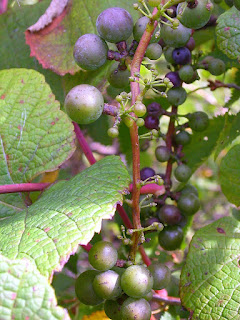
 In my early years, I resided in the Tohoku region of Japan. Near the housing complex nestled in the mountains, there was a forest where various fruits grew.   Among them, the mountain grapes held a special fascination for my young heart. Simply put, they looked delicious. Despite being warned by adults never to eat them, they seemed even more tempting.   During that time, I heard a folktale called "Saru-zake" (Monkey's Wine). It narrated a story of a monkey living in the mountains who hid the mountain grapes he had gathered in a tree hollow. Over time, it miraculously turned into wine. A woodcutter who discovered it tasted the wine, found it incredibly delicious, drank too much, and ended up drunk—such was the essence of the story, if I recall correctly.   This wine made from mountain grapes (Vitis coignetiae) is considered one of Japan's oldest alcoholic beverages archaeologically. Its origins can be traced back to the Jomon period, approximately 10,000...

The UK : Easter Pancakes

Image
  31st March 2024 marks Easter, a celebration in Christianity commemorating the resurrection of Christ. This widely embraced Christian holiday, now quite prevalent in Japan, is a moveable feast, changing dates each year. Despite the uncertainties of the pandemic, places like Tokyo Disneyland used to host Easter events in pre-COVID times, featuring egg-shaped chocolates and festive treats. The Easter period spans about a month and a half. In Catholic tradition, it kicks off with Shrove Tuesday's Carnival, 41 days before Easter, followed by Ash Wednesday, marking the start of Lent – a period focusing on prayer, fasting, and charitable acts, sharing in the suffering of Christ. During Lent, individuals often undertake acts of kindness or give up indulgences such as sweets. On Shrove Tuesday, known in the UK as "Pancake Day," festivities involve making and flipping pancakes in a unique competition. Towns and villages host pancake-flipping challenges, and some even attempt the ...

When the Cherry Blossoms Bloom

Image
 In 1990, I came back to Japan from the UK in an attempt to enter a university in Tokyo. Back in those days, high school qualifications from schools abroad were not readily accepted by Japanese universities. Even if you had completed A-levels or taken the SAT, you still had to sit a university entrance examination. Only a limited number of universities had special admission schemes for students who had studied abroad, so we were left with very few choices. I failed my first university entrance examination. I had not used Japanese for a while, and I was not familiar with writing essays in Japanese. It was quite stressful to write all those kanji characters by hand, hoping that I would not make too many mistakes—which, probably, I did. I took a summer course for students who had graduated from high schools abroad. It was designed to brush up our English and Japanese, as well as our essay-writing skills. After two months of intensive study, I became much more confident about writing i...

England : The Taste of Forbidden Drink

Image
Taste of forbidden drink Long time ago when I was living in the UK, I realized that cider (hard cider, or cidre) was available at pubs. However, when I go to the pubs with my English friends, they always tried to stop me drinking cider, saying “It’s not for young people” “Japanese won’t like it” “The Japanese people are weak on alcohol. Cider is too strong for the Japanese”. Those were their opinion, but I was baffled with their strong rejections. These English friends called themselves connoisseur of Japan, as all of them have lived in Japan for a bout year. They all rejected cider that it dose not match Japanese’ taste.  Looking back now, they probably experienced something uncomfortable when suggesting cider to the Japanese people. Possibly they did not want to let me down.  After long years passed from the incident, I finally found a chance to try British cider. A pub in Tokyo was displaying their drink menu on their website, and there were eight choices of cider. Recallin...